
Bo Li 李波 — AI for Biology: from multimodal virtual cells to experimental decisions
I build AI methods that turn multimodal cellular measurements into experimental decisions. My research follows one loop: learn cellular state from multimodal data, predict how cells respond to perturbations, test which predicted differences experiments can resolve, and choose which interventions to test next under a finite budget.
News
Earlier news (2024)
Research
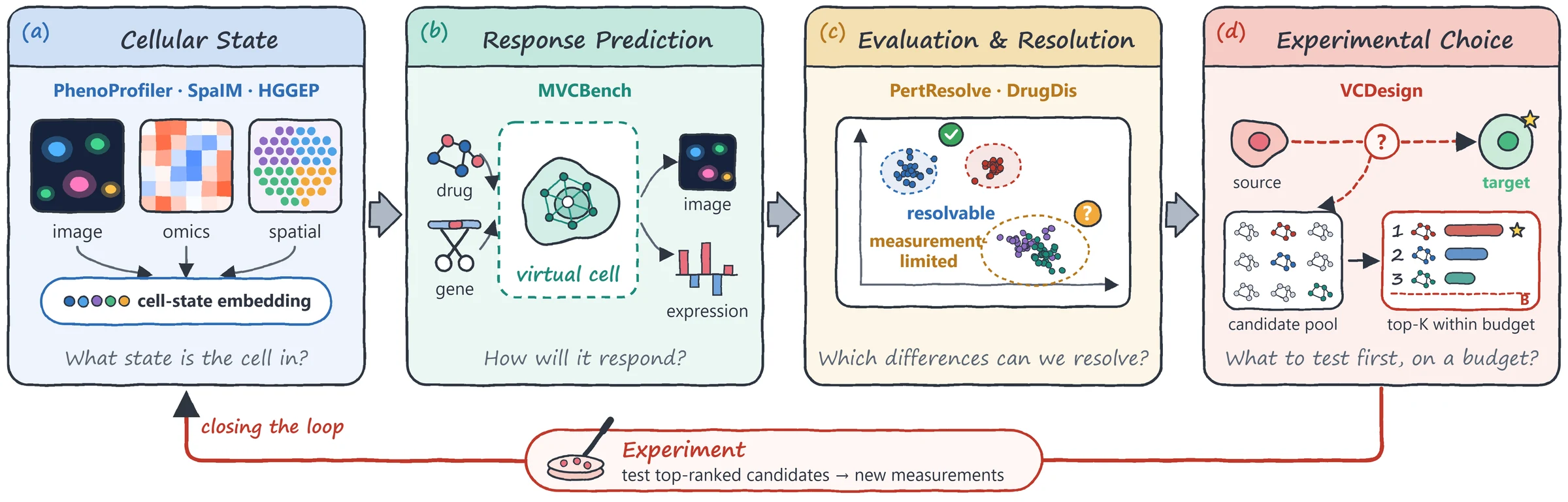
What representations of cellular state can be learned from imaging and omics measurements?
Learn cellular representations from microscopy, single-cell and spatial omics, and histology, so that different measurements describe the same cell state.
How well do predicted perturbation responses transfer across modalities, compounds and cellular contexts?
Predict how cells respond to drug and genetic perturbations in both image and expression readouts, and test what generalizes across compounds, cell lines, plates, and datasets.
When does a predicted gain reflect biology that the assay can reproducibly resolve?
Determine which biological distinctions experiments can reproducibly resolve and what response structure models actually recover, separating measurement limits from model limits before interpreting benchmark results.
Given a target cellular state and a finite budget, which interventions are worth testing next?
Rank candidate interventions by their predicted shift from a source state toward a target state, test the top-K within budget B, and evaluate the choices against independently measured outcomes.
Adaptive intervention design: connect virtual-cell models and scientific agents with independent experimental feedback, so each round of experiments informs the next.
Selected Publications
† Equal contribution · * Corresponding author
Published
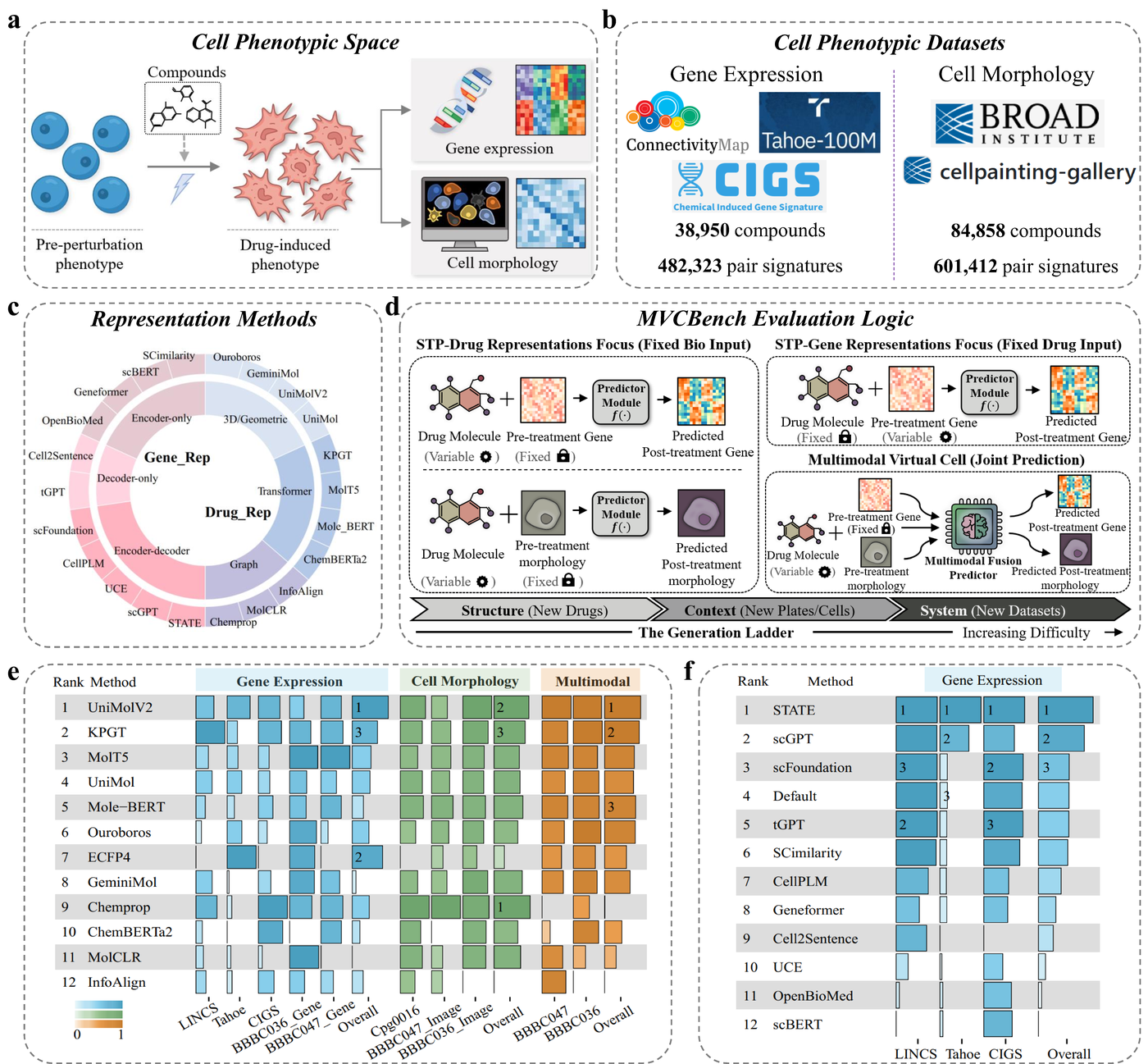
MVCBench: A multimodal benchmark for drug-induced virtual cell phenotypes
Bo Li†, Qing Wang†, Shihang Wang†, Bob Zhang*, Yuzhong Peng, Pinxian Zeng, Chengliang Liu, Mengran Li, Ziyang Tang, Xiaojun Yao, Chuxia Deng, Qianqian Song*
Nature Communications Accepted in Principle (2026) · Project · Preprint · Code · Data ·
TL;DR: Benchmarks image- and expression-based perturbation prediction under compound, cell-line, plate and dataset shifts.
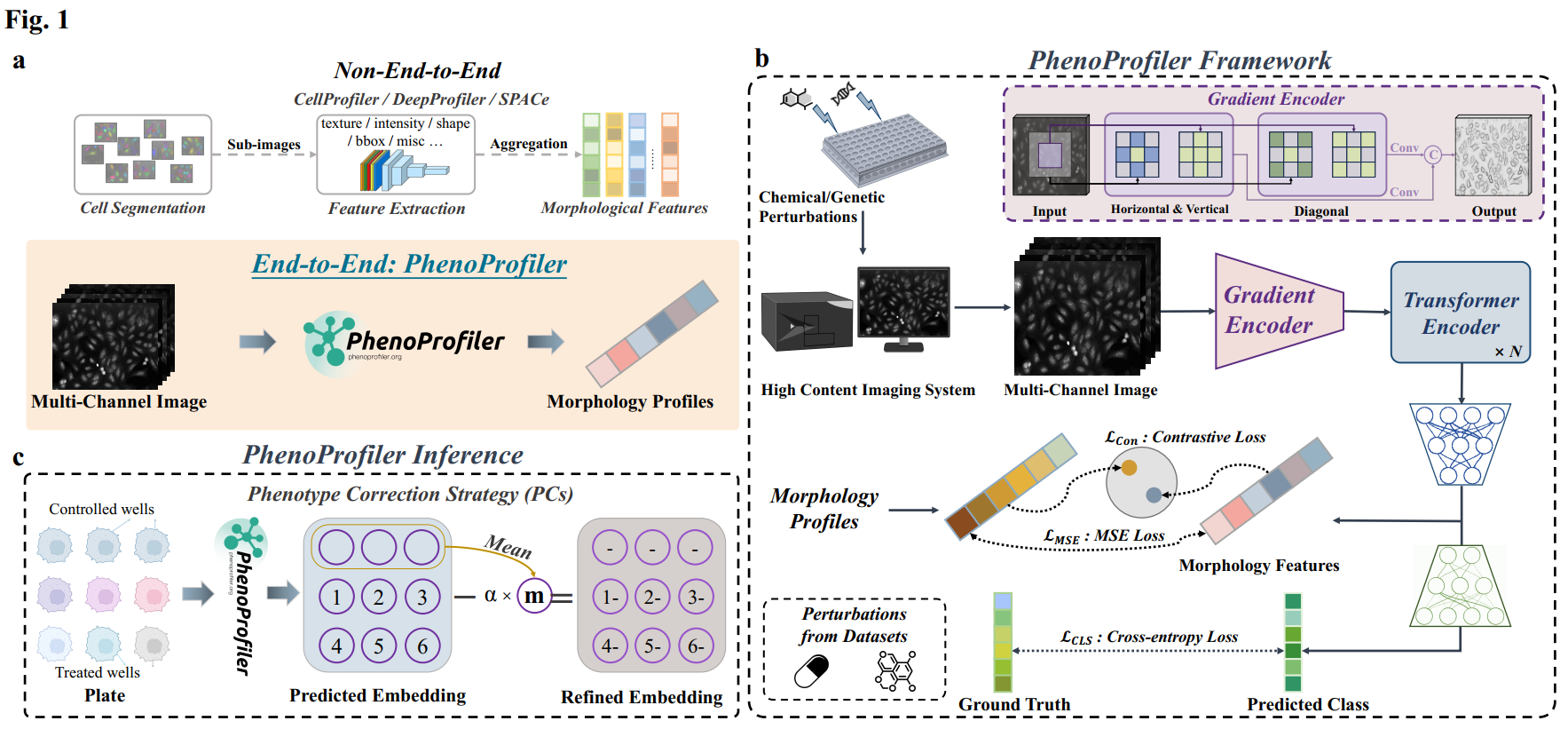
PhenoProfiler: Advancing phenotypic learning for image-based drug discovery
Bo Li, Bob Zhang*, Chengyang Zhang, Minghao Zhou, Weiliang Huang, Shihang Wang, Qing Wang, Mengran Li, Yong Zhang, Qianqian Song*
Nature Communications 17, 793 (2026) · Paper · Webserver · Code · arXiv ·
TL;DR: Learns phenotypic profiles directly from high-content microscopy images, without hand-crafted feature-extraction pipelines, for compound profiling.
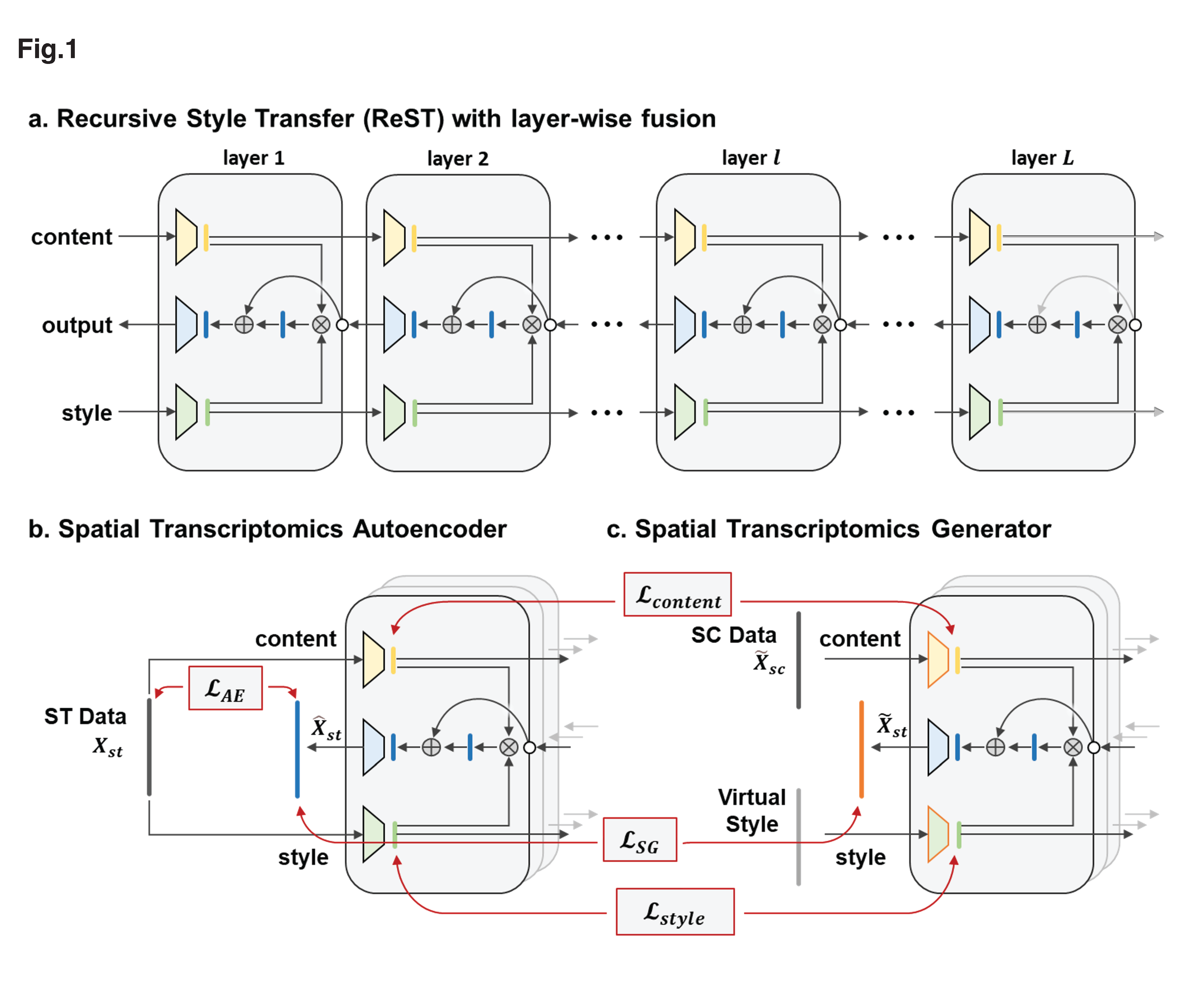
SpaIM: Single-cell spatial transcriptomics imputation via style transfer
Bo Li†, Ziyang Tang†, Aishwarya Budhkar, Xiang Liu, Tonglin Zhang, Baijian Yang*, Jing Su*, Qianqian Song*
Nature Communications 16, 7861 (2025) · Paper · Code · Data ·
TL;DR: Treats imputation of unmeasured genes in spatial transcriptomics as style transfer from single-cell references.
Current work · under review and preprints
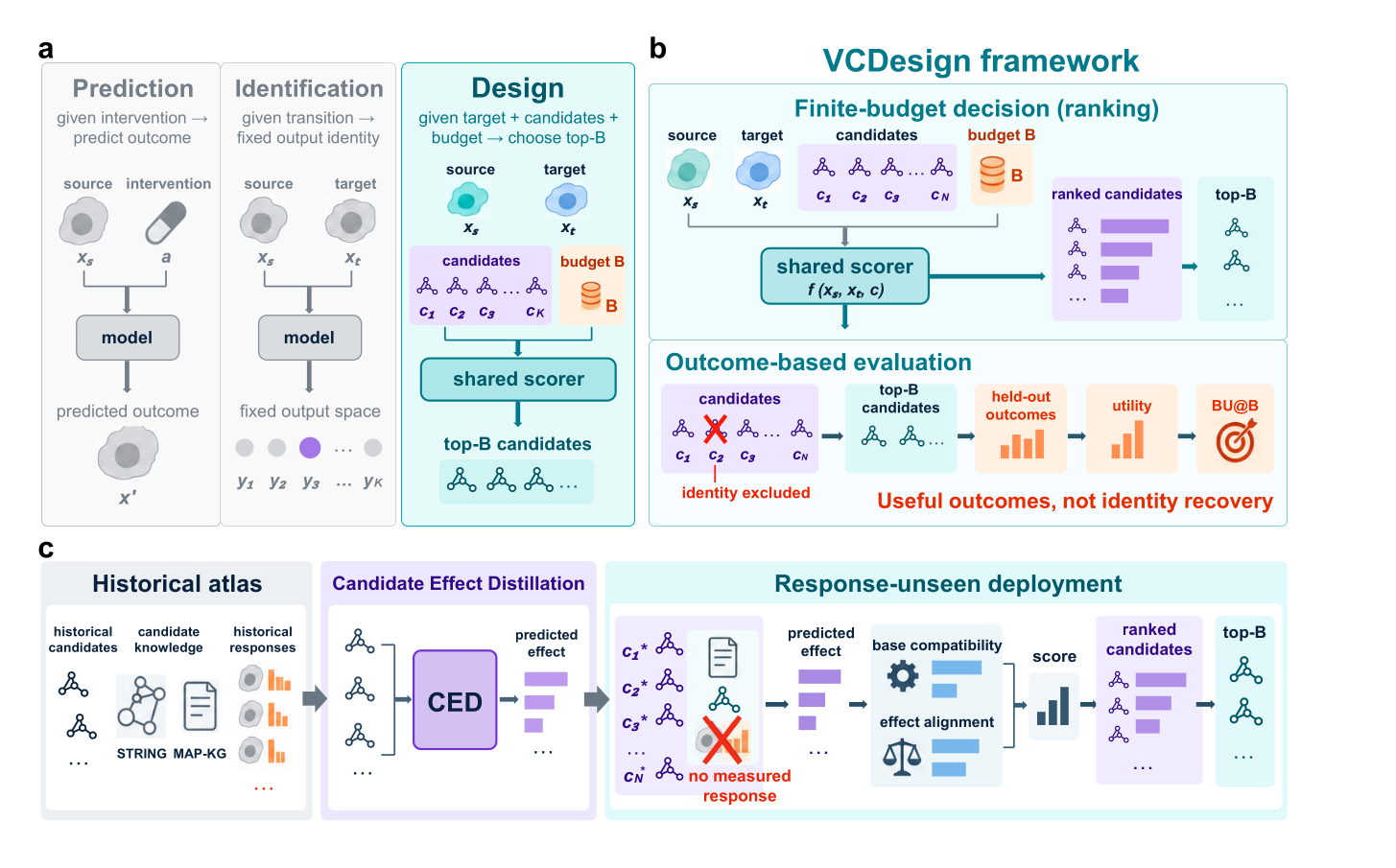
VCDesign: Finite-budget intervention design for virtual cells
Bo Li†, Lin Wang†, Bob Zhang*, Mengran Li, Zhenchao Tang, Chengyang Zhang, Minghao Sun, Chengliang Liu, Zhiyuan Liu, Yang Zhang*
Under review 2026 · Project · Manuscript · Code · Data ·
TL;DR: Ranks candidate interventions toward a target state under a fixed budget, scores the selected set against independently measured held-out outcomes, and transfers evidence to candidates with no measured response.
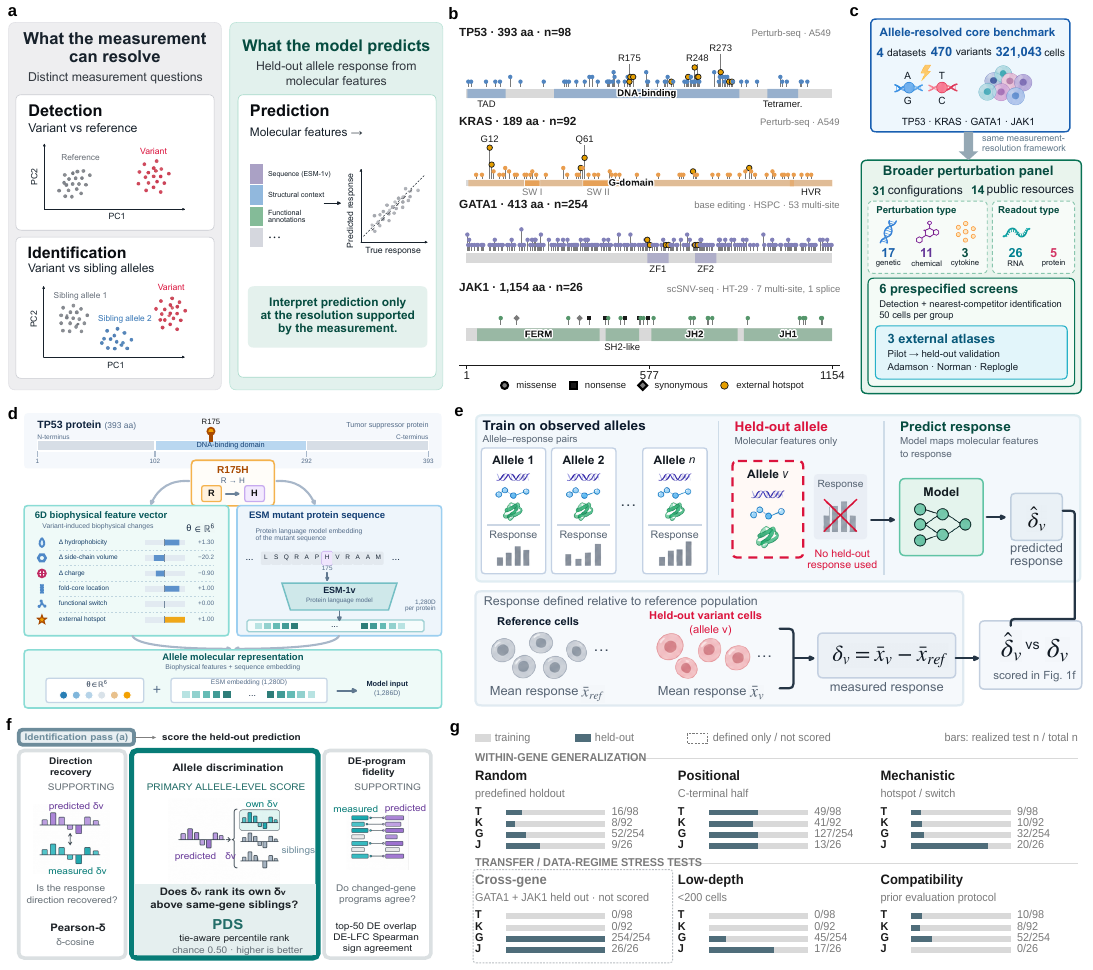
Measurement resolution constrains fine-grained perturbation prediction
Bo Li†, Chengyang Zhang†, Mengran Li†, Bob Zhang*, Lin Wang, Zhenchao Tang, Jun Liu, Chengliang Liu, Chen Wei, Yuhao Yi*, Jiancheng Lv, Yang Zhang*
Under review 2026 · Project · Manuscript · Code · Data ·
TL;DR: Asks which fine-grained perturbation distinctions an assay can reproducibly resolve, separating model limits from measurement limits.
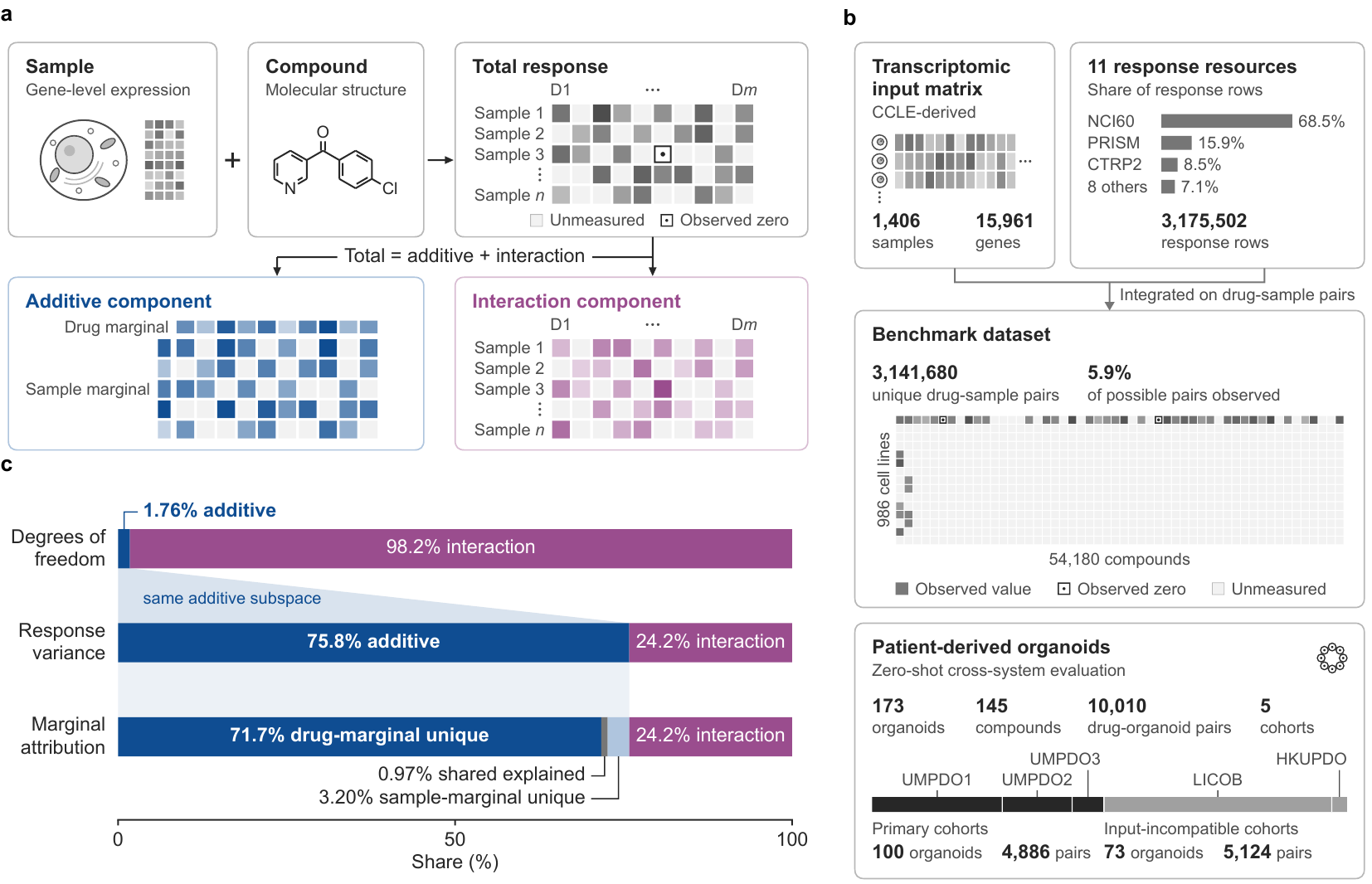
DrugDis: Disentangling general and context-specific effects in drug-response prediction
Bo Li†, Chengliang Liu†, Yuzhong Peng†, Bob Zhang*, Qing Wang, Pinxian Zeng, Mengran Li, Shenghui Huang, Chuxia Deng*, Yang Zhang*
Under review 2026 · Project · Manuscript · Supplement · Code · Data ·
TL;DR: Decomposes drug-response prediction into general drug, general sample and drug–sample interaction effects, showing that aggregate accuracy can hide weak recovery of the context-specific part.
Software & Resources
Selected research software and community resources.
| Project | What it is | Stars |
|---|---|---|
| VCDesign | Finite-budget intervention ranking and decision-aligned evaluation for virtual cells | 4 |
| MVCBench | Multimodal benchmark for virtual-cell representation and generalization | 10 |
| PhenoProfiler | End-to-end phenotypic representation learning for high-content cell imaging | 11 |
| Awesome-Virtual-Cell | Curated literature, datasets, benchmarks, and resources for virtual-cell research | 323 |
| Nature-Paper-Skills | Agent skills for scientific manuscript drafting, revision, auditing, and resubmission | 578 |
| SpaIM | Cross-modal modeling for spatial transcriptomics imputation | 24 |
Stars as of Oct 13, 2026 · Links open current GitHub counts.
Education
-
2026.06 – 2027.06: National University of Singapore
- Visiting Student. Host: Prof. Yang Zhang
-
2024.08 – Present (expected 2027.06): University of Macau
- Ph.D. in Computer Science, Department of Artificial Intelligence, Full Scholarship. Advisor: Prof. Bob Zhang; Co-advisor: Prof. Qianqian Song, Purdue University
-
2021.09 – 2024.07: Beijing University of Technology
- M.Eng. in Electronic Information. Advisors: Prof. Yong Zhang, Prof. Baocai Yin
-
2017.09 – 2021.07: Beijing Information Science & Technology University
- B.Eng. in Robotics Engineering. Advisor: Prof. Hongbo Huang
Selected Honors & Awards
- 2024: Ph.D. Full Scholarship, University of Macau
- 2024.07: Top 100 Graduates, Beijing University of Technology (top 100 of 6,331)
- 2024.07 & 2021.07: Beijing Outstanding Graduate
- 2023.10: Xiaomi Scholarship
- 2022.10: National Scholarship, Ministry of Education of China
- 2021: First Prize, Science & Technology Innovation Scholarship, Beijing Information Science & Technology University
Patents
Co-inventor of two granted Chinese invention patents on cell localization: CN115457547B (2026) and CN115810046B (2026).
Academic Service
Conference reviewer: ICLR 2027.
Journal reviewer: Science Advances, IEEE TPAMI, IEEE TIP, IEEE TNNLS, Medical Image Analysis, Bioinformatics, Briefings in Bioinformatics, Pattern Recognition, BMC Biology, Engineering Applications of Artificial Intelligence, and Expert Systems with Applications.
Collaborations: Purdue University, Cornell University, University of Florida, National University of Singapore, Sun Yat-sen University, Sichuan University, Beijing University of Technology, and Macao Polytechnic University.